How Often Can You Get a Hydrafacial?
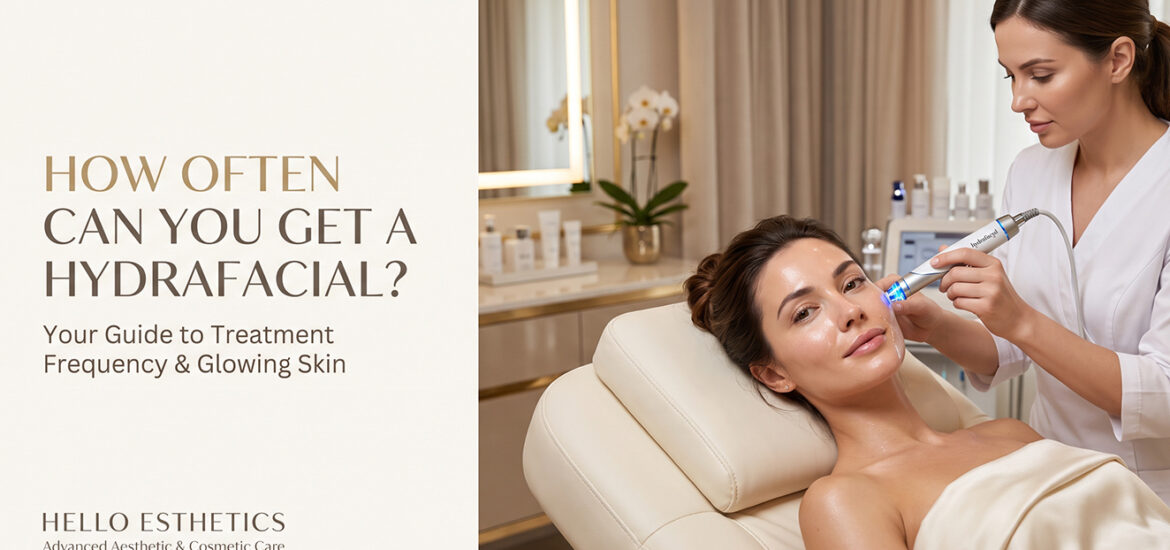
A Hydrafacial has become one of the most popular non-invasive facial treatments for people who want cleaner, smoother, brighter, and more hydrated-looking skin without significant downtime. By combining cleansing, exfoliation, extraction, and hydration in one treatment, a Hydrafacial can address several common skin concerns while leaving the skin looking refreshed.
But one question comes up frequently: How often can you get a Hydrafacial?
For many people, a Hydrafacial once every month is a practical maintenance schedule. However, there is no universal treatment frequency that works for everyone. The ideal interval depends on your skin type, concerns, treatment intensity, lifestyle, and aesthetic goals. The official Hydrafacial guidance states that many clients schedule treatments about once a month, while others may choose every two to three months. More frequent treatments may sometimes be appropriate when specifically recommended by a qualified provider.
At Hello Esthetics, the focus is on personalized aesthetic care. Instead of recommending the same facial schedule for everyone, your skin condition and goals should be considered before creating a Hydrafacial treatment plan.
What Is a Hydrafacial?
A Hydrafacial is a non-invasive facial treatment designed to cleanse, exfoliate, extract impurities, and hydrate the skin during a single session.
According to the Dermatologist Hydrafacial treatment, the treatment uses Vortex-Fusion technology and specialized HydroPeel tips to combine cleansing, exfoliation, extraction, and serum infusion. Treatments can also be customized with boosters, LED light therapy, and other options depending on the treatment plan.
Unlike more aggressive procedures, a Hydrafacial is designed to provide a refreshing treatment experience while targeting concerns such as:
- Dull-looking skin
- Dehydration
- Clogged pores
- Excess oil
- Uneven-looking skin tone
- Rough skin texture
- Fine lines
- Congestion
- Blemishes
- Lack of radiance
Because the treatment can be customized, the frequency can also vary.
So, How Often Should You Get a Hydrafacial?
For most people interested in regular skin maintenance, once every four weeks or approximately once a month is a commonly recommended starting point.
The official Hydrafacial FAQ says many clients schedule sessions about once a month, while others find that treatments every two to three months meet their needs.
A monthly Hydrafacial schedule can be particularly appealing for people who want to maintain a consistent glow and support hydration and skin clarity.
However, more frequent treatment is not automatically better.
Your provider should consider your individual skin condition before determining how often you should receive treatment.
Why Is Monthly Hydrafacial Treatment So Popular?
Skin is continuously exposed to environmental factors such as pollution, makeup, sweat, oil, sun exposure, and other irritants.
Even an effective daily skincare routine may not provide the same type of professional cleansing and exfoliation as an in-clinic facial treatment.
A monthly Hydrafacial can become part of a broader skincare routine focused on maintaining:
- Hydrated-looking skin
- A smoother appearance
- Cleaner-looking pores
- Improved radiance
- More even-looking texture
- A refreshed complexion
The goal is not simply to schedule as many treatments as possible. Instead, a consistent and appropriate routine can help you maintain the appearance you achieve from professional skincare treatments.
Can You Get a Hydrafacial Every Week?
This is where individualized treatment planning becomes important.
The official Hydrafacial website notes that because the treatment is gentle and customizable, some individuals may receive treatments as frequently as every one to two weeks when pursuing more intensive results or ongoing maintenance.
However, that does not mean everyone should receive a Hydrafacial every week.
Your provider may adjust treatment intensity, solutions, and boosters according to your skin’s condition. A frequent treatment schedule should therefore be based on professional assessment rather than simply following a generic online recommendation.
If your skin becomes irritated, unusually sensitive, excessively dry, or uncomfortable after treatment, the interval may need to be adjusted.
Can You Get a Hydrafacial Every Two Weeks?
For selected patients, a two-week interval may be considered.
This may be relevant when a person has a specific short-term skincare goal or is following a treatment program designed by a professional.
However, more frequent sessions should be approached carefully. Your skin’s tolerance, the products being used, the intensity of exfoliation, and any additional treatments performed during the appointment can all influence how frequently another session should be scheduled.
A consultation at Hello Esthetics can help determine whether a two-week treatment schedule is appropriate for your skin.
How Often Should You Get a Hydrafacial for Maintenance?
If your main goal is maintaining healthy-looking, hydrated, radiant skin, a monthly Hydrafacial can be a convenient maintenance routine.
Some people may not need monthly treatment and may prefer to schedule a session every two or three months, particularly if their home skincare routine is already effective and their skin concerns are minimal. The official Hydrafacial guidance recognizes both monthly and less frequent schedules.
Your maintenance schedule can also change over time.
For example, you might initially have treatments more regularly while addressing congestion or dullness and then move to a less frequent maintenance schedule once your skin goals are better managed.
How Often Should You Get a Hydrafacial for Acne-Prone Skin?
People with oily or acne-prone skin often look for professional facial treatments to help manage the appearance of congestion and clogged pores.
Hydrafacial treatments can be customized to address congestion and blemish-prone skin. The official Hydrafacial information lists congestion, clogged pores, blemishes, and uneven-looking skin among concerns that can be addressed with customized treatments.
However, a Hydrafacial should not be considered a universal treatment for every type of acne.
If you have active, inflamed, severe, or persistent acne, it is important to obtain an appropriate professional assessment rather than relying solely on cosmetic facials.
For milder congestion, a provider may develop a treatment schedule based on how your skin responds.
How Often Should You Get a Hydrafacial for Dry Skin?
Dehydrated or dry-looking skin may benefit from treatments focused on hydration and gentle exfoliation.
Hydrafacial treatments are designed to combine exfoliation with serum infusion, making them attractive to people who want a more hydrated and refreshed appearance.
However, if your skin barrier is irritated, inflamed, or compromised, your provider may recommend postponing treatment until the skin is in better condition.
A good Hydrafacial treatment plan should complement—not replace—a consistent home skincare routine.
How Often Should You Get a Hydrafacial for Dull Skin?
Dull-looking skin can result from accumulated dead skin cells, dehydration, environmental exposure, and other factors.
A Hydrafacial can provide professional cleansing and exfoliation while infusing hydrating products into the skin.
For someone primarily interested in maintaining a brighter-looking complexion, monthly treatment may be a reasonable starting point.
Many people also choose to schedule a Hydrafacial before an important occasion because of the fresh, polished appearance that can follow treatment.
How Often Should You Get a Hydrafacial Before an Event?
If you have a wedding, party, photoshoot, business event, or other important occasion coming up, a Hydrafacial can be incorporated into your skincare preparation.
However, it is generally better not to experiment with a completely new treatment immediately before an important event.
If you have never had a Hydrafacial before, scheduling your first session well before the event gives you time to see how your skin responds.
For an established treatment routine, your provider can recommend appropriate timing based on your skin condition and the specific treatment being performed.
Is It Safe to Get Hydrafacial Treatments Regularly?
Hydrafacial is designed as a non-invasive treatment and is generally considered gentle and customizable. The official Hydrafacial information notes that treatment intensity, solutions, and boosters can be adjusted according to individual skin needs.
Nevertheless, “gentle” does not mean that every person should receive the treatment at the same frequency.
Individual factors matter.
Your provider should consider:
- Skin sensitivity
- Current skin condition
- Active irritation
- Current skincare products
- Recent cosmetic procedures
- Treatment intensity
- Selected boosters
- Your overall treatment goals
This is one reason professional consultation is valuable when developing a recurring facial schedule.
What Happens During a Hydrafacial?
A typical Hydrafacial combines multiple steps in a single session.
1. Cleansing
The skin is cleansed to remove surface impurities, makeup, oil, and other debris.
2. Exfoliation
A controlled exfoliation helps remove dead surface skin cells and can leave the complexion looking smoother.
3. Extraction
The treatment uses specialized suction technology to help remove impurities from pores.
4. Hydration
Hydrating serums and customized solutions are delivered during the treatment.
5. Optional Customization
Depending on the provider and treatment plan, additional boosters or LED light therapy may be incorporated.
The official Hydrafacial information confirms that treatments can be customized with boosters and LED light therapy.
How Long Do Hydrafacial Results Last?
One reason people enjoy Hydrafacial treatments is that the skin can look immediately refreshed after the session.
However, the duration of visible results varies.
Factors such as:
- Skin type
- Age
- Lifestyle
- Skincare routine
- Sun exposure
- Hydration
- Pollution
- Makeup habits
- Existing skin concerns
can all influence how long the refreshed appearance lasts.
This is why many people choose regular maintenance rather than expecting a single treatment to provide permanent results.
A Hydrafacial is best viewed as part of an ongoing skincare and aesthetic routine.
Is One Hydrafacial Enough?
One treatment can provide noticeable short-term improvements in the appearance of hydration, smoothness, and radiance.
However, if you are trying to address ongoing concerns such as congestion, dullness, or uneven texture, a series of appropriately spaced treatments may be more useful than relying on one appointment.
The exact number of treatments required depends on your skin and goals.
Rather than promising that a specific number of sessions will work for everyone, a professional provider can assess your progress and adjust your treatment plan.
Does More Frequent Hydrafacial Mean Better Results?
Not necessarily.
This is an important point for anyone researching Hydrafacial frequency.
More treatment does not always mean better skin.
Your skin needs appropriate care between treatments, and excessive or unnecessarily frequent exfoliation may not be suitable for everyone.
The official Hydrafacial guidance emphasizes that treatment frequency should depend on individual skin needs and goals.
A personalized schedule is therefore preferable to automatically booking the treatment every week.
Hydrafacial and Your Home Skincare Routine
Professional facial treatments work best when combined with consistent home skincare.
Between Hydrafacial sessions, your routine may include:
- Gentle cleansing
- Appropriate moisturizer
- Daily sunscreen
- Skin-specific active ingredients
- Adequate hydration
- Avoiding unnecessary irritation
Sun protection is especially important because UV exposure can contribute to premature skin aging and uneven pigmentation.
Your aesthetic provider can help you determine which products are suitable for your skin and which products may need to be paused around your treatment.
Can You Combine Hydrafacial With Other Treatments?
Hydrafacial treatments may sometimes be combined with other aesthetic services, depending on your individual skin condition and the treatment plan.
Potential additions may include:
- LED light therapy
- Customized boosters
- Other facial treatments
- Skin-rejuvenation procedures
The official Hydrafacial website specifically describes boosters and LED light therapy as customization options.
However, combining treatments does not automatically produce better results.
Some procedures may need to be spaced apart to minimize irritation and allow the skin to recover appropriately.
Always tell your provider about recent treatments and skincare procedures before your appointment.
Who Should Avoid or Delay a Hydrafacial?
Although Hydrafacial is designed to be customizable, there may be situations in which treatment should be postponed or modified.
You should tell your provider if you have:
- Active skin irritation
- Open wounds
- Significant inflammation
- A current skin infection
- Severe active acne
- Recent aggressive cosmetic procedures
- Known sensitivity to treatment ingredients
Your provider can determine whether the treatment is appropriate and whether modifications are needed.
If you have a diagnosed skin condition or are undergoing medical treatment for your skin, discuss the procedure with your healthcare professional before booking.
Hydrafacial vs. Traditional Facial
A traditional facial can involve cleansing, exfoliation, steaming, extraction, masks, massage, and moisturization.
A Hydrafacial uses specialized equipment and technology to combine cleansing, exfoliation, extraction, and hydration in a structured treatment.
The official Hydrafacial system describes Vortex-Fusion technology as a key part of the treatment.
The right choice depends on your skin goals, preferences, and professional assessment.
Hydrafacial for Men
Hydrafacial is not limited to women.
Men may choose Hydrafacial treatments to address:
- Oily-looking skin
- Congestion
- Enlarged-looking pores
- Dull complexion
- Rough texture
- Dehydrated skin
- Post-shaving skin concerns
A customized treatment can be adapted to individual skin needs regardless of gender.
Hydrafacial for Different Age Groups
The ideal frequency can also change with age.
Younger adults may focus primarily on congestion, oil control, hydration, and maintaining a healthy-looking complexion.
Adults in their 30s and 40s may increasingly focus on hydration, fine lines, uneven texture, and prevention-focused skincare.
Older adults may incorporate professional facials into a broader skin-rejuvenation routine.
However, age alone should not determine treatment frequency. Skin condition and treatment goals are more important.
Why Choose Hello Esthetics for Your Hydrafacial?
At Hello Esthetics, Hydrafacial treatment can be incorporated into a personalized aesthetic skincare plan rather than treated as a one-size-fits-all procedure.
Your skin may have completely different needs from another person’s skin.
One person may need monthly hydration-focused treatments. Another may benefit from less frequent maintenance. Someone with congestion may require a different approach from someone primarily concerned with dryness or dullness.
The objective is to create a treatment routine that supports your individual aesthetic goals while respecting your skin’s condition.
Hello Esthetics can help you understand:
- How frequently you may need Hydrafacial
- Which treatment option is appropriate
- Whether boosters may be useful
- How to care for your skin between sessions
- When to schedule your next appointment
- Whether another aesthetic treatment may be more suitable
A Simple Hydrafacial Schedule
While your provider should personalize your treatment plan, a general framework can look like this:
For Regular Skin Maintenance
Approximately once a month
This is a popular maintenance schedule for people who want consistent hydration, clarity, and radiance.
For Occasional Skincare
Every 2–3 months
This may work for people who primarily want an occasional professional facial or event-focused glow.
For Specific Short-Term Goals
More frequent sessions may sometimes be considered
The official Hydrafacial guidance notes that some people may receive treatments every one to two weeks when pursuing specific goals, but frequency should be determined according to individual skin needs.
Frequently Asked Questions
How often can you get a Hydrafacial?
Many people receive a Hydrafacial approximately once a month. Some schedule treatments every two to three months, while selected individuals may receive them more frequently under professional guidance.
Can I get a Hydrafacial every week?
Some official Hydrafacial guidance indicates that treatments may be performed as frequently as every one to two weeks for certain individuals, but this should not be interpreted as a universal recommendation. Your provider should determine the appropriate frequency for your skin.
Is monthly Hydrafacial safe?
For many people, monthly treatment can be an appropriate maintenance schedule. However, your skin condition, treatment intensity, and any additional procedures should be considered before establishing a recurring plan.
How many Hydrafacials do I need to see results?
Many people notice a refreshed appearance after one treatment, but the number of sessions needed for ongoing skin concerns varies. Your provider can recommend a treatment series based on your goals.
Can Hydrafacial remove acne?
Hydrafacial can help address the appearance of congestion and clogged pores, but it is not a universal treatment for acne. Persistent or severe acne should be evaluated by an appropriate medical professional.
Can I get a Hydrafacial before a wedding?
Yes, Hydrafacial is often considered for event preparation because it can provide a refreshed, hydrated-looking appearance. If it is your first treatment, it is wise to schedule it sufficiently ahead of the event rather than trying it for the first time immediately beforehand.
How long should I wait between Hydrafacial treatments?
For many clients, approximately one month is a common interval. However, your individual treatment plan may call for a shorter or longer interval depending on your skin and goals.
Can Hydrafacial replace my skincare routine?
No. A professional facial should complement a consistent home skincare routine rather than replace it.
Is Hydrafacial suitable for sensitive skin?
Hydrafacial treatments can be adjusted for different skin types, and official provider guidance notes that treatment intensity, solutions, and boosters can be modified according to individual needs. However, a professional assessment is still important if your skin is highly reactive or irritated.
Final Thoughts: How Often Can You Get a Hydrafacial?
So, how often can you get a Hydrafacial?
For many people, once every month is a practical and popular maintenance schedule. Others may prefer treatments every two or three months, while more frequent sessions may be appropriate for selected individuals with specific goals under professional guidance.
The most important factor is not simply how frequently you can book a Hydrafacial, but how frequently your skin actually needs one.
Your skin type, sensitivity, concerns, lifestyle, current skincare routine, and desired results should all influence the decision.
At Hello Esthetics, a personalized consultation can help you determine the right Hydrafacial frequency for your skin and create a professional skincare plan designed around your individual goals.
If you’re looking for Hydrafacial treatment in Pakistan, professional facial care, Hydrafacial for glowing skin, Hydrafacial for acne and clogged pores, or a customized Hydrafacial skincare routine, speak with the team at Hello Esthetics to determine the most appropriate treatment schedule for you.
Healthy-looking skin is not about doing more—it is about doing what your skin needs, consistently and correctly.
Medical disclaimer: This article is intended for general educational and informational purposes. It does not replace an individual consultation, diagnosis, or treatment recommendation from a qualified healthcare professional. Treatment frequency and suitability vary from person to person.